
As the master swimmer sped past Mary's chair, he seemed to materialize out of nowhere. In seconds, he was in the midst of the playing children.
Before Marie could stand, the young lifeguard had lifted her 10-year-old son above the water and was bringing him safely to the pool's edge.
Her son had been drowning right in front of her, and she hadn't noticed.

Once safely out, the boy ran into his mother's arms. Only then did Marie grasp the close call they'd just had.
What did the lifeguard spot that the mother missed? Drowning isn't dramatic—no big splashes or screams, contrary to movie portrayals.
Trained by experts and drawing from his experience, the rescuer recognized the subtle signs. Marie, like many, had learned about drowning from TV.
If you're supervising kids near water, knowing these signs is critical, lifeguards or not.
As a former lifeguard, I've seen stories like Marie's too often. Drownings happen in silence.
Our TV-conditioned expectations of cries and waves rarely match reality.
Dr. Francesco A. Pia coined the "Instinctive Drowning Response" to describe what happens when someone fights submersion.
It's far quieter than imagined: minimal splashing, waving, or yelling.
Drowning ranks as the second leading cause of accidental death for children under 15, behind only vehicle accidents.
Of about 750 child drownings expected next year, roughly 350 occur within 20 meters of a parent or adult.
In 10% of cases, a parent is actively supervising but misses the signs.

Drowning defies expectations. Dr. Pia outlines it as:
1. Drowning victims rarely call for help. The respiratory system prioritizes breathing over speech.
2. Their mouths bob below and above the surface too briefly for exhalation, inhalation, and shouting—only quick breaths.
3. Arms extend sideways on the water's surface for leverage to lift the mouth for air, not waving.
4. Instinctual arm movements prevent controlled actions like grabbing a rescuer or lifeline.
5. The body stays upright, feet ineffective. Without rescue, submersion occurs in 20-60 seconds.
Someone yelling and waving may be in aquatic distress, not full drowning—they can still grab aids.
Aquatic distress can precede drowning but allows some control.
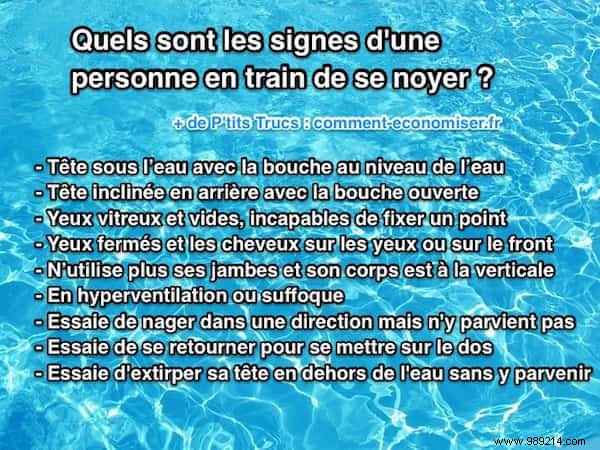
Real drowning signs include:
Even if kids seem fine in the water, stay vigilant—the best clue can be that they don't look distressed. They might appear to be standing calmly.
Ask, "Are you okay?" A verbal response means they're fine.
A blank stare? You have under 30 seconds to act.
Remember: Playing kids are noisy. Sudden quiet demands checking in.
