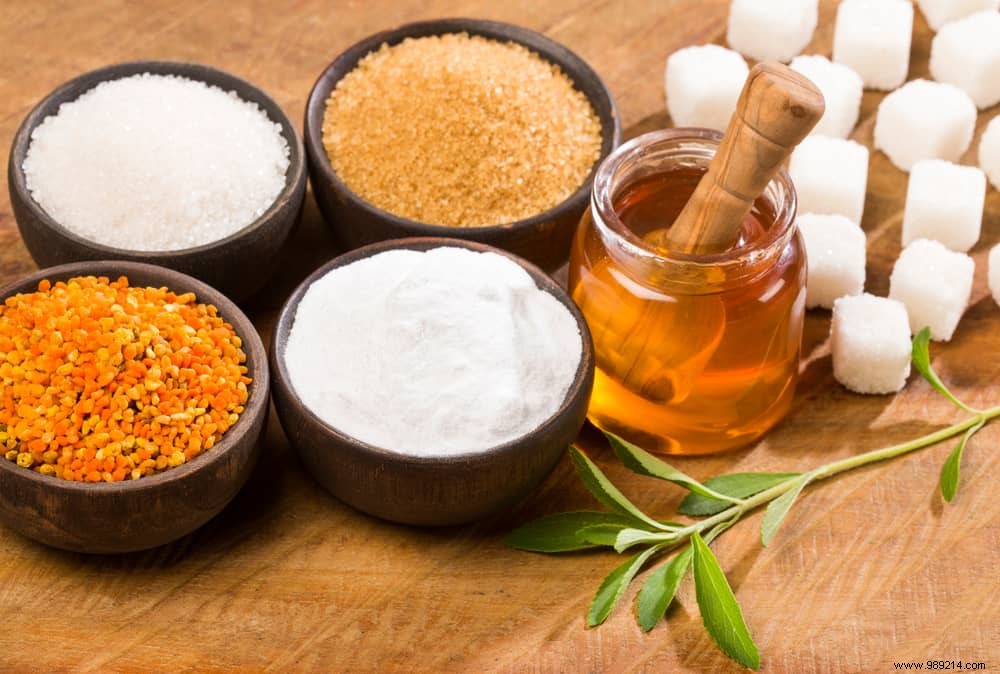
Sugar is ubiquitous in modern diets, making it tough to avoid. The World Health Organization (WHO) advises limiting added sugars to under 10% of daily energy intake—about 50 grams or 12 teaspoons for adults.1 Yet, studies show 20-30% of people in France exceed this.2 Cutting back can boost your health. Here's expert insight on why and how, plus guidance on selecting the best sugar substitutes.
What Is Sugar?
Carbohydrates fuel our bodies, dividing into simple sugars (sweet-tasting) and starches (key for sustained energy). Common simple sugars in our diets include:
- Glucose, found naturally in fruits, honey, and some vegetables;
- Fructose, abundant in fruits, vegetables, and tubers like artichokes, onions, and chicory;
- Lactose, present in dairy products;
- Sucrose, or "table sugar," from beets (white) or cane (brown). It's one glucose molecule bonded to one fructose. Though processing differs, their nutritional profiles are nearly identical—brown sugar has trace minerals, but insignificant amounts.
Sucrose sets the sweetness benchmark, packing 400 kcal per 100g—the highest among carbs.
Why Cut Back on Sugar?
Simple sugars digest rapidly, providing quick energy but few nutrients. Overconsumption links to serious health issues:
- Type 2 Diabetes: Paired with obesity or genetics, excess sugar heightens risk.
- Obesity: Sugary diets drive weight gain.
- Cavities: Sugar erodes dental health.
- Heart Disease: Elevated blood sugar damages arteries, raising heart attack and stroke odds.
- Cancers: High intake correlates with breast and digestive cancers (e.g., colorectal, stomach).3
Track and lower intake with apps like Glycemic Index and Load or Suggestarless.
3 Proven Tips to Reduce Sugar Intake
Sugar hides in everyday foods, but simple habits help:
- Stick to water at meals—even fruit juices pack sugar. Dilute if indulging.
- Avoid snacking, especially while screen-time bound. Opt for nuts or dried fruit if needed.
- Ditch sugar in yogurt or coffee—your taste buds adapt quickly.
Decoding "Light" Product Labels
"Light," "reduced," or "sugar-free" claims flood shelves. Regulations clarify:
- "Light": At least 30% less sugar, fat, or calories in one category vs. standard—not all.
- "No Added Sugar": No sweeteners added, but natural sugars remain.
- "Sugar Free": ≤0.5g sugar/100g, but fats/calories may be high.
- "Low Sugar": ≤5g/100g (≤2.5g/100ml liquids).
- "0%": Zero in one nutrient (e.g., sugar), others unrestricted.
Flip packages for ingredients. Try Sugar Scan app for comparisons.
Diabetes and Blood Sugar Basics
Insulin from the pancreas regulates blood sugar, targeting ≤1g/L. In diabetes, insufficient insulin or poor function causes chronic high levels (hyperglycemia).
Glycemic index (GI, 0-100) measures insulin impact:
- GI >60: Fast sugars, high insulin spike.
- 40-60: Moderate.
- <40: Slow sugars, low spike.
Smart Sugar Replacements4
Use these in coffee, yogurt, or baking—adjust by sweetness.
Natural Options
- Honey: Lower GI than sucrose, twice as sweet—use half the amount.
- Coconut Blossom Sugar: 1:1 sugar swap, GI 35, caramel notes for desserts.
- Stevia: 200x sweeter, zero calories. Pure green powder (organic stores) best; refined versions often mix with polyols. 2g ≈100g sugar; licorice taste limits uses.5
Syrups
- Agave: 3x sweeter, lower calories, high fructose—good for drinks/cooking.
- Coconut Flower: Similar to agave.
- Yacon: Diabetes-friendly (no blood sugar rise), 50-70% less sweet—double up.
- Rice: No fructose, caramel taste for baking; high GI, not for diabetics.
- Maple: 20% fewer calories, 2x sweeter—50g replaces 100g sugar.
Polyols (Sugar Alcohols)
Fermented substitutes: Low GI, moderate use to avoid digestive issues.
- Xylitol: Sucrose-sweet, 40% fewer calories; diabetic-safe, laxative in excess.
- Erythritol: 70% sucrose sweetness, zero calories/GI impact; well-tolerated.
Synthetic Sweeteners: Use Sparingly
Common in diet foods/drinks, but they trigger sugar cravings, disrupt metabolism, and risk type 2 diabetes.
- Aspartame: 200x sweeter, zero calories—avoid.
- Sucralose: 600x sweeter; gut issues, weight gain.
- Saccharin: 400x sweeter, metallic—often blended.
Master sugar reduction with habits: Water over soda, skip sweets weekdays, savor treats occasionally. For personalized advice, explore fitness and nutrition coaching with Wellness.
Sources:
1 WHO
2 ANSES
3 Santé Magazine
4 Force Ultra Nature
5 Femme Actuelle
Docteur Bonne Bouffe
