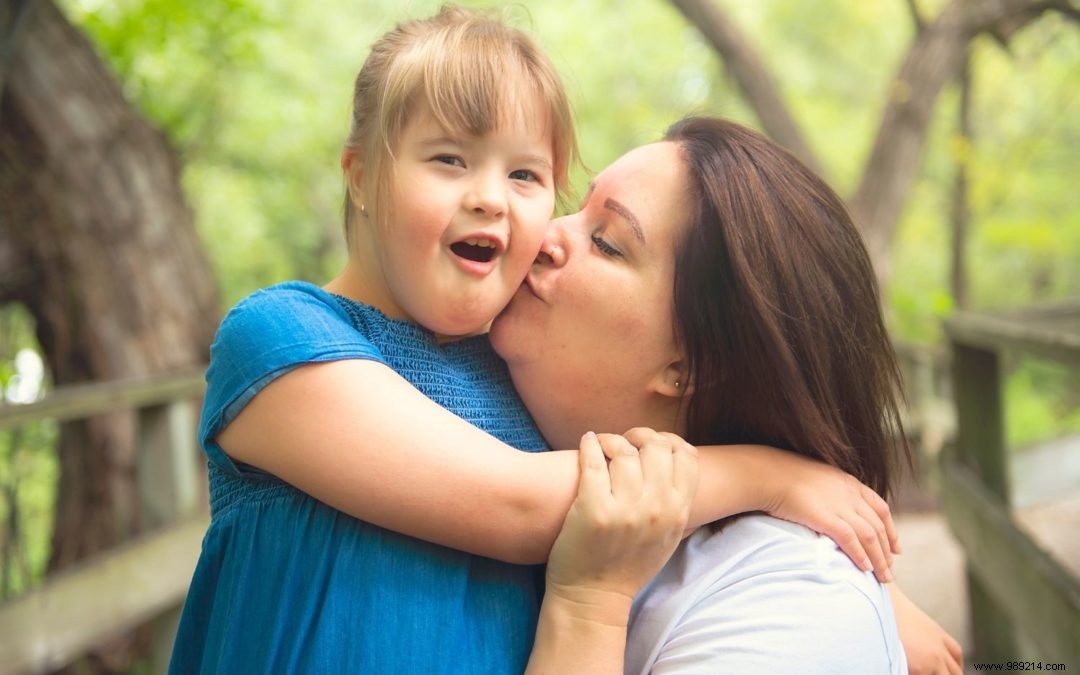
Welcoming a child with Trisomy 21, also known as Down syndrome, often brings a wave of questions and concerns for parents. In France, 451 babies were born with this genetic condition in 2018, according to the 2020 Biomedicine medical report.
Parents of children with Down syndrome adapt their approach to support and education. On World Down Syndrome Day, discover proven strategies from experts to foster a balanced, fulfilling life for your child and family.
Trisomy 21 is a chromosomal abnormality involving an extra chromosome in the 21st pair, creating a whole-body imbalance. As explained by the Jérôme Lejeune Institute, beyond visible physical traits, it leads to:
Combined with low muscle tone, these challenges cause greater fatigue than in typical children.
Individuals with Down syndrome need vigilant health monitoring due to elevated risks. Many experience heart or digestive malformations requiring prompt treatment. Ongoing check-ups help manage chronic ear infections, endocrine disorders, neurological issues, myopia, and hearing problems.
Prenatal diagnosis identifies most cases, though some are discovered at birth. Parents often feel isolated at first. Seek support from organizations like the Perce-Neige Foundation and connect with other families via forums.
Smaller hands and feet, plus hypotonia, hinder early motor skills. Experts recommend immediate physiotherapy, psychomotricity, speech therapy, and occupational therapy to optimize development and reduce delays.
Adjust your schedule by becoming a family caregiver. The AJPP (Allocation Journalière de Présence Parentale) from CAF provides 310 paid leave days over three years. Additional aid like the AEEH supports your child's education.
Start with a precise assessment of your child's needs. The Jérôme Lejeune Institute, specializing in Down syndrome care, offers covered consultations and tailored recommendations.
Schooling options include ULIS units for inclusive education or IME for specialized support. ESATs aid vocational training and employment. Initiatives like Cafés Joyeux hire those with Down syndrome, promoting inclusion. True autonomy is achievable, as shown by Noelia, the first teacher with Down syndrome.
On March 21, World Down Syndrome Day, share experiences and insights for greater awareness.
