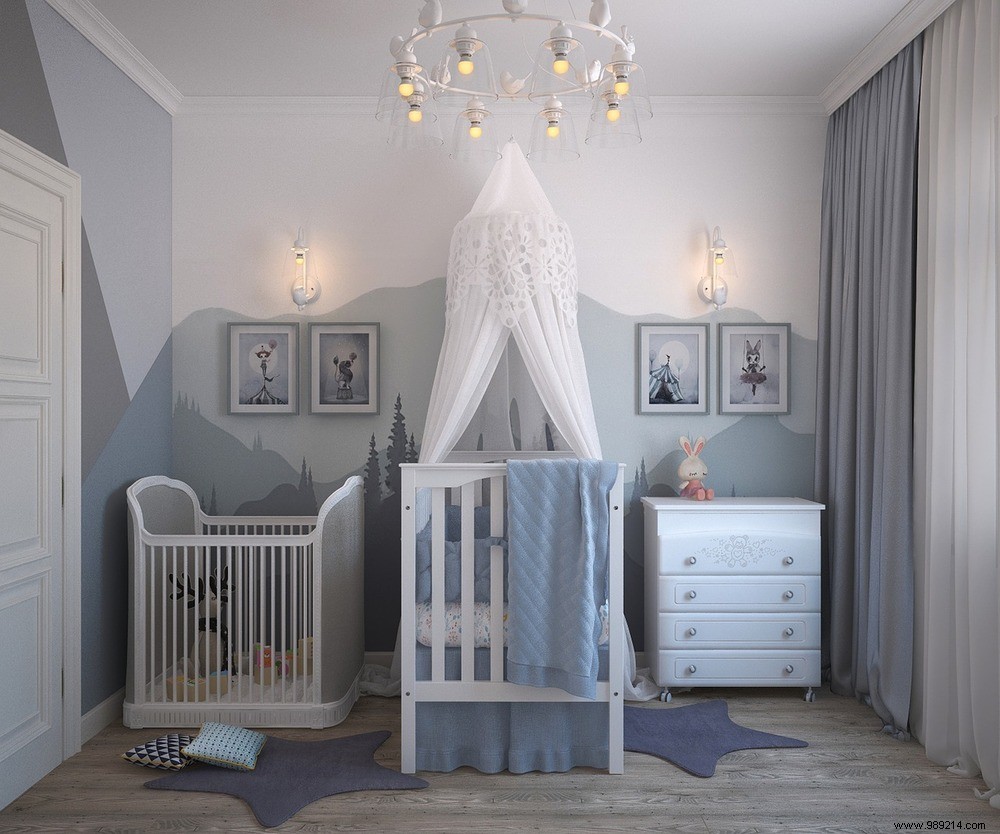
Welcoming a new baby transforms family life, turning your firstborn into a big sibling. Sharing a room might be part of the adjustment. Here's how to make it smooth and restful for everyone.
Contents 1. The arrival of the baby 2. Put yourself in the baby's shoes 3. Arranging the room for toddler and baby 4. Bed transitions 5. Bedtime routinesUntil birth, your baby was snug in the womb. Your older child eagerly awaited a playmate, imagining fun like with friends. Reality hits differently: the newborn mostly eats, sleeps, and cries—on repeat. It might feel less exciting than a pet. Sharing the room can be tough, but thoughtful strategies help everyone adjust.

Your newborn is discovering a noisy world after nine months of muffled voices and womb-rocking comfort. They crave parental closeness post-birth—gradually extending that bond, like lengthening the umbilical cord. Prioritize room-sharing after a few months for family well-being.
The older child needs time to bond. Newborns require frequent night care, especially if breastfeeding. Keeping the baby in your room initially saves sleep: no midnight treks for feeding, diapering, or soothing. Parents wake more rested.
Importantly, siblings rarely disturb each other with natural night noises—they adapt easily. Noise isn't the issue.
Choose setups based on your children's bond. Give the older one time to warm to sharing their space, originally designed for them.
For initial co-sleeping, use a bassinet beside your bed—affordable, cozy, with walls for security and easy access to your scent and milk. Or opt for a side-car co-sleeper for 3-6 months.

Prepare your older child by letting them upgrade: pass the crib to the baby and pick a new big-kid bed, even choosing the color.
Refresh the old crib together—repaint, add stencils, stickers, or names (big for older, small for donor).
If using a convertible crib or your older child clings to theirs, get a separate one for the newborn—start in your room, then transition. Involve them in decorating. Later, consider separable bunks, twins, or pull-outs based on room size (source: ctendance.fr). Repurpose cribs into benches.
