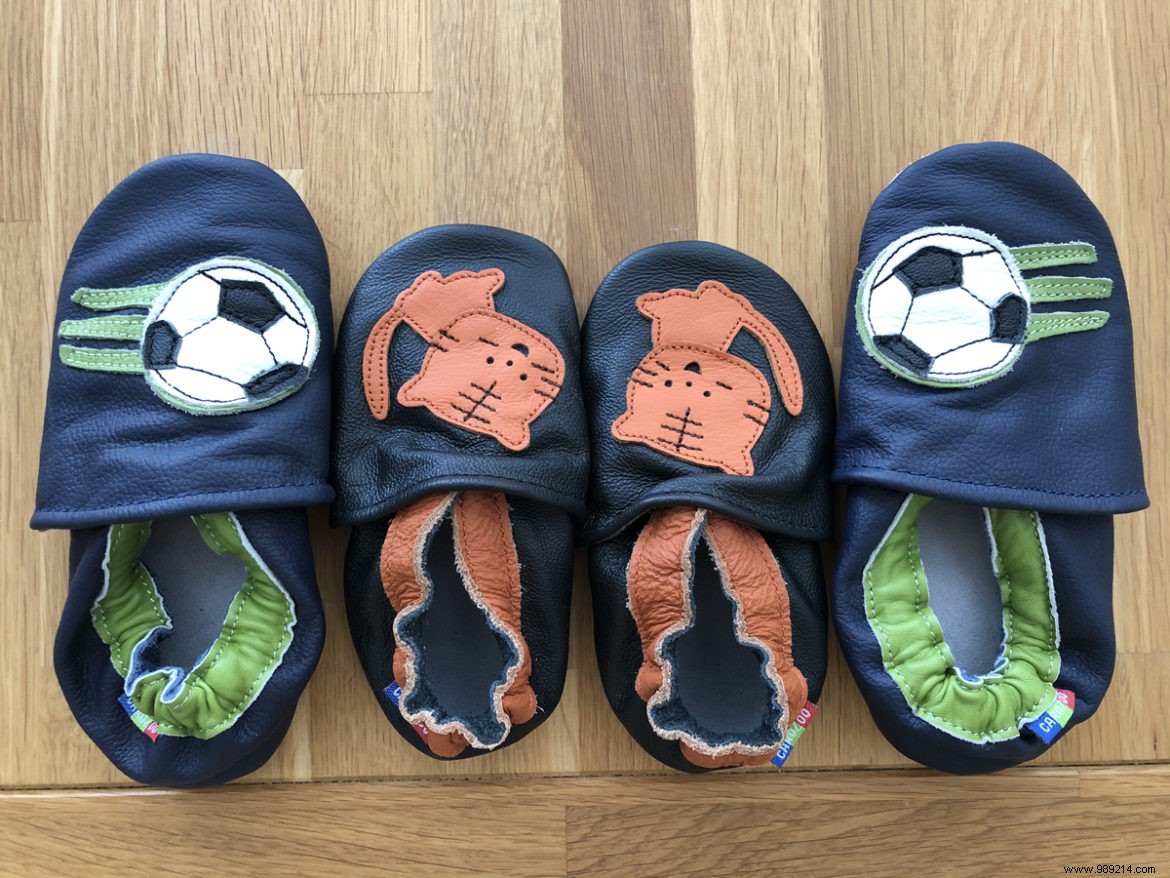
We all adore those tiny baby feet, which explains the flood of adorable slippers, shoes, and boots from every brand.
Selecting the perfect footwear for your baby's first steps isn't simple. Factors like posture, balance, and motor development must guide your choice. Baby feet need space to grow freely while remaining protected.
When my children were babies, my mother-in-law questioned my slipper choices. Back then, the norm was rigid, high-top leather boots laced tightly. Advocates claimed they supported fragile ankles and guided proper foot growth, acting as both protection and a 'splint.'
Modern osteopaths debunk this entirely.
Let your child go barefoot whenever possible—it's ideal for building muscles and balance at their own pace.
Barefoot walking activates foot sensory receptors, processing surface sensations (like temperature or texture) and deeper cues (for balance and posture). This freedom fosters natural motor skill discovery, aligning with free movement principles I've applied with my own kids.
For cold floors or sun protection, opt for non-slip socks or ultra-soft leather slippers, like those we used from www.nat-essence.fr. They offer cute patterns—my boys loved the 'Cat' and 'Balloon' designs and wore them daily.
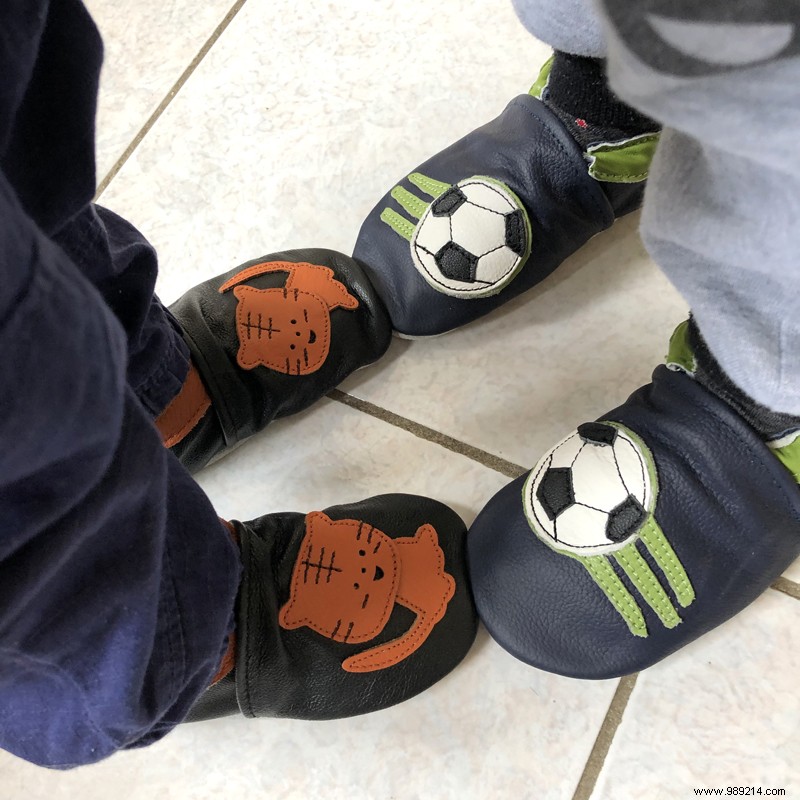
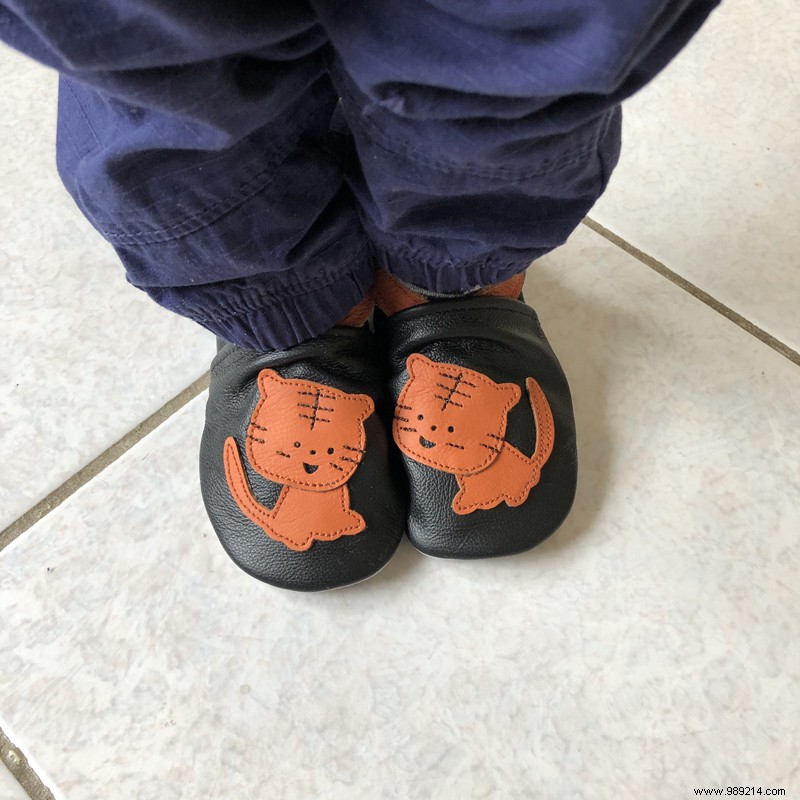
These provide gentle protection without restricting movement.
Bare feet, soft booties, or socks are essential for babies to explore their world confidently.
Once walking steadily, introduce proper outdoor shoes, but prioritize barefoot time or soft slippers indoors whenever safe.
With luck, this habit lasts a lifetime—nothing beats the feel of cool grass or warm sand for body and soul!
As walking becomes regular, you'll need shoes for gravel, pavement, and forest trails.
Until age three, foot bones are still forming, so avoid rigid shoes. Choose soles that are durable yet flexible (bend easily like a foot in motion), with slight ankle height but no pressure on the malleoli (the bony ankle knobs).
Baby taking first steps
Flexible, sturdy leather soles perfect for new walkers' adventures.
In summary, at any age, prioritize foot freedom for muscle strength and adaptability, paired with activity-appropriate protection.
