Tablets, smartphones, gaming consoles, and computers expose children to significant risks for their health and development.
Scientists continually warn parents about these dangers, prompting campaigns like 3-6-9-12 to raise awareness.
The initiative aims to curb excessive screen time and mitigate real threats, including obesity, myopia, sleep disturbances, poor academic performance, language delays, and issues with attention and behavior.
Here's the proven 3-6-9-12 rule to safeguard children from screen overexposure:

Parenting in the digital age is challenging. Regardless of a child's age, moms and dads often feel like they're constantly policing screen use to stay within healthy limits.
It's tempting to allow extended screen sessions for a moment of peace or to sidestep tantrums, but the long-term effects demand vigilance.
Excessive screen time can lead to tangible developmental setbacks. Dr. Anne-Lise Ducanda, a maternal and child protection physician in Évry, Essonne, shares firsthand observations: more children struggle with basic instructions, running, or climbing during consultations.
Experts recognize screens can't be entirely eliminated—and a total ban might not serve children well. Instead, families can establish balanced boundaries.
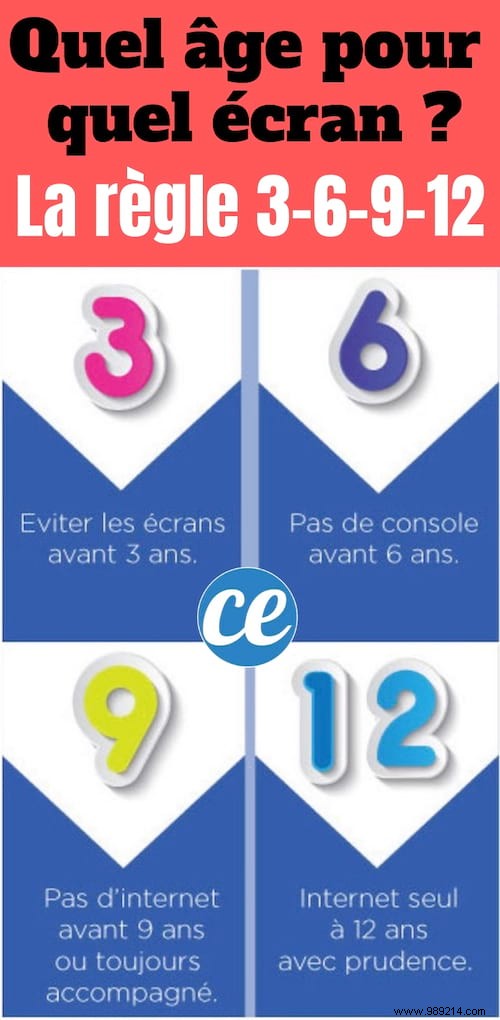
Psychiatrist Serge Tisseron developed the 3-6-9-12 rule as practical guidelines:
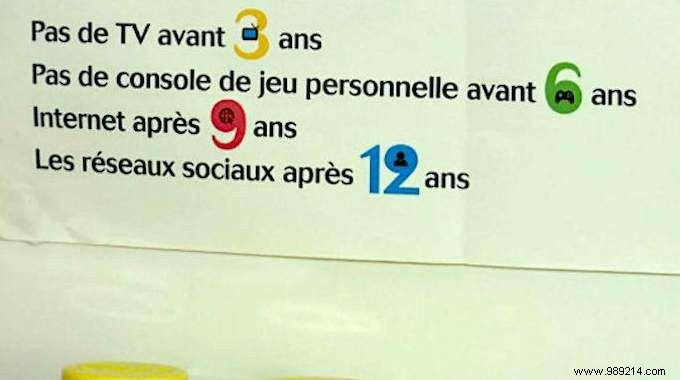
- Under 3 years: No TV.
- Under 6 years: No gaming consoles.
- Under 9 years: No internet access.
- Under 12 years: No social media.
As Tisseron explains, these align with key milestones: "3 years, entry into kindergarten; 6 years, entry into CP; 8-9 years, when children typically master reading and writing; and the transition to middle school at 11, soon followed by adolescence."
Some psychologists advise delaying a child's first smartphone until high school entry.
The Superior Audiovisual Council (CSA) reinforces this: no screens for children under 3, and no news programs for 8-year-olds. Opt for age-appropriate content like animations, children's films, educational shows, or documentaries.
With these rules, parents often ask: How much screen time is appropriate by age?
Child psychiatrist Dr. Stéphane Clerget offers a straightforward formula: 1 hour per year of age per week, never exceeding 1 hour per day.
For example, a 5-year-old gets up to 5 hours weekly; an 8-year-old, 8 hours.
For deeper insights into screen effects, download the free "prevention" poster here. We also recommend Serge Tisseron's book: 3-6-9-12: Taming Screens and Growing Up.
