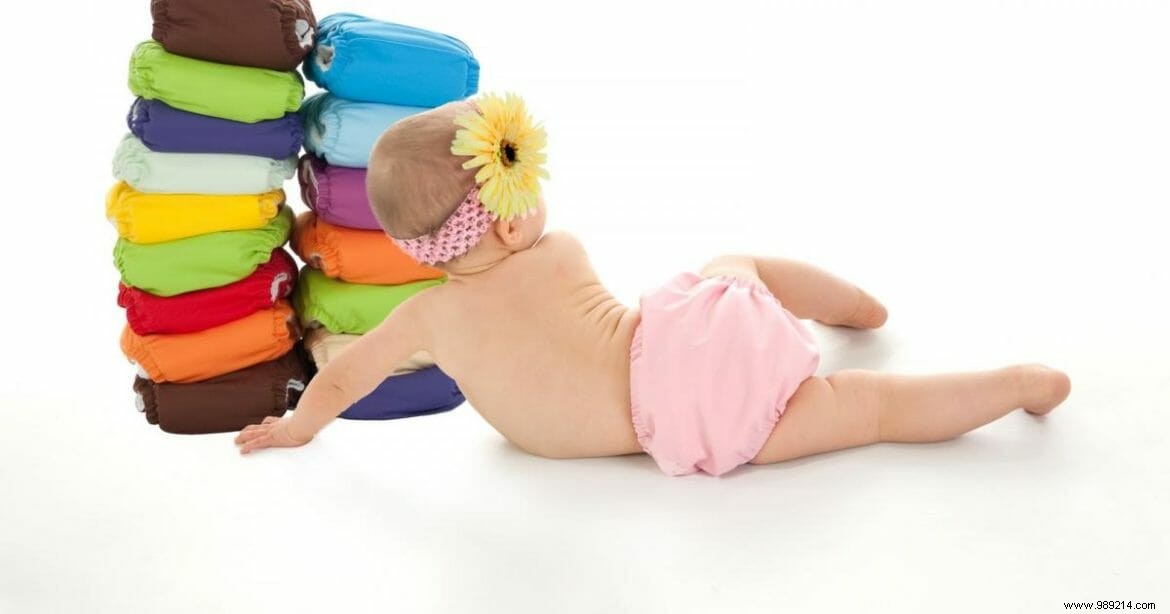
A large majority of parents opt from the birth of their child for disposable diapers from major brands, the leader of which is Pampers. But for some time now, we have been witnessing the return of washable diapers, which are emerging with the trend of more responsible consumption and more respectful of the environment. But are they as convenient as disposables? Overview of the pros and cons of washable diapers.
Contents 1 Washable diapers, an undeniable source of savings 2 A small gesture for the environment 3 A healthier composition 4 The disadvantages of washable diapersThe 1 st The advantage of reusable diapers is surely the savings you will make! Indeed, against the 4000 disposable nappies (about 1 ton) that your child will use until he is 2 years old, you will only have to buy about 20 to 40 washable nappies, plus a few euros of detergent.
However, it should be kept in mind before embarking on the adventure, that the entry price may seem quite high at first glance. Indeed, the price of a reusable diaper varies between 8 and 15€ each depending on the brand and the quality.
Then you take part in the protection of the environment, because disposable nappies are not biodegradable and the ton of waste takes 500 years to degrade. Washing your washable diaper therefore significantly reduces your waste, especially if you have several children.
Practical, disposable nappies can be washed with the rest of your laundry, with a suitable product. Obviously, for saddles you can always use a disposable protective sheet.
But apart from this fact, cloth diapers are more hygienic because they are made without chemicals, with cotton or natural fibers from organic farming. They are well suited to baby's fragile skin.
They can be worn as clothes, thanks to their various colors and patterns, and reused for the 2 nd child. They usually work with a pressure system to grow with your child. Be careful however, the size is rarely suitable for a newborn, especially at the crotch which is too big for washable diapers.
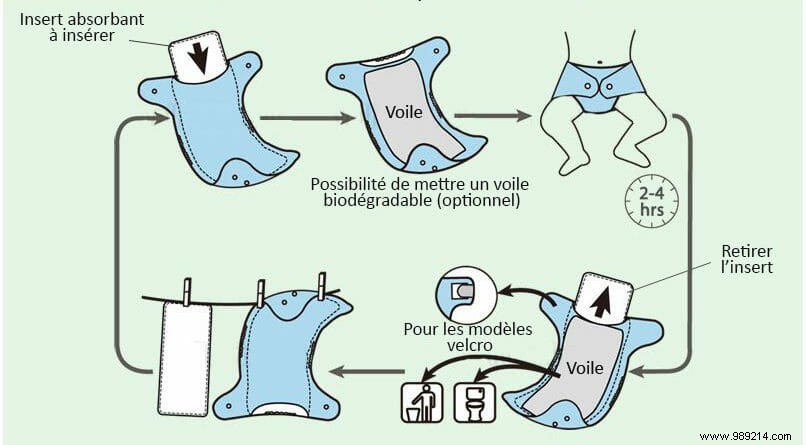
With washable diapers, you have to change the baby as soon as he soils his diaper. Indeed, the washable diaper is not absorbent like the disposable diaper. So you have to schedule diaper wash times, which disposables saved you! More work, because you also have to choose the detergent to use!
Because of the storage of soiled nappies, you will not be safe from an unpleasant odor until the next wash. Although worn as a garment in its own right, the washable diaper is however bulky, depending on the model, which may falsely enlarge the baby's bottom.
And we have already mentioned it above, the price can scare some parents because it takes between 10 and 15 cloth diapers per child in order to have a suitable renewal rate, without requiring constant organization to have diapers. clean.
