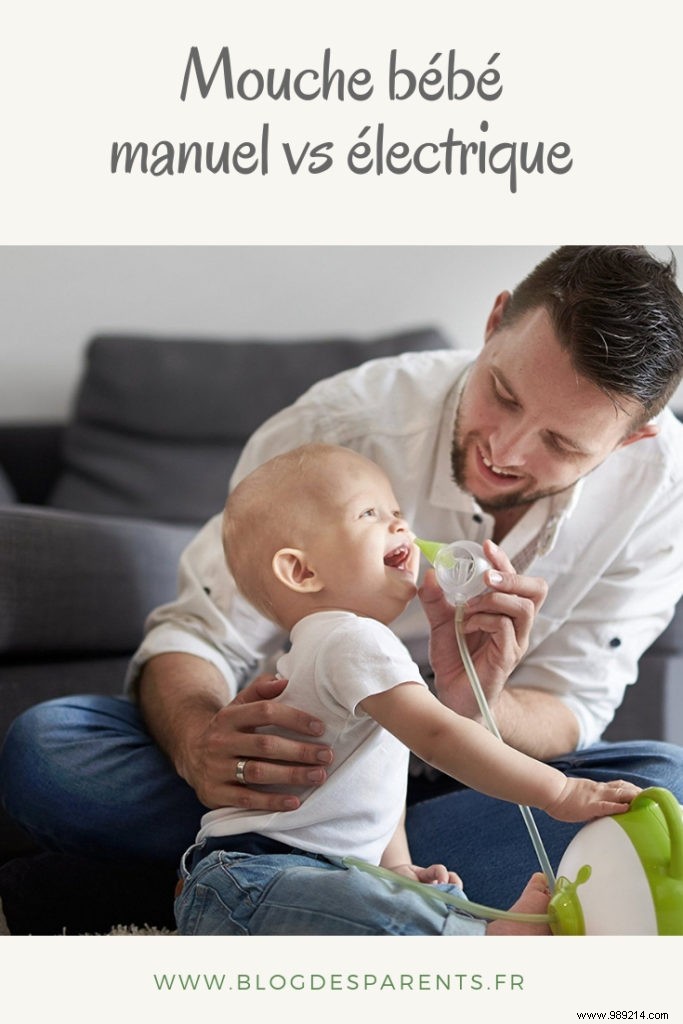
Is your baby's nose congested from a cold? Mucus buildup disrupts sleep and leads to daytime fussiness. Adults can blow their noses easily, but infants rely on parents. While saline rinses remain a staple in many nurseries, they're challenging without practice. That's why nasal aspirators have become a go-to for parents seeking gentle, effective relief. From classic bulb syringes and mouthpiece models to advanced electric versions, options have improved significantly.
Contents 1 The manual baby nasal aspirator 1.1 Its advantages? 1.2 Its weak points? 2 The electric baby nasal aspirator 2.1 Its advantages? 2.2 Its disadvantages? 2.3 Are you manual baby blower or electric baby blower?Between manual and electric, which is right for your family? This guide compares their effectiveness, pros, and cons to help you decide.
Pear-shaped bulb or mouthpiece styles remain popular today.
The pear-shaped bulb allows gentle aspiration without risking damage to delicate nasal membranes. Mouthpiece versions provide stronger suction for better clearing.
Both are affordable and widely available at pharmacies and supermarkets. Paired with saline spray, they offer safe, easy nose clearing.
Bulb syringes often feel outdated and less effective than mouthpiece options.
Some parents dislike seeing mucus exit via the mouth, even with filters. Overly strong suction can injure blood vessels, causing nosebleeds.
Hygiene is key: rinse thoroughly after each use. For mouthpiece models, replace disposable filters and always use saline first.

Electric baby nasal aspirators top the list for parents of stuffy toddlers. Battery-powered motors deliver consistent, powerful suction to remove even stubborn mucus. Simply place the tip in the nostril and press start for gentle, immediate results.
Superior efficiency sets electrics apart—they thoroughly aspirate residue and clean nostrils. Available in various sizes at budget-friendly prices (starting around €10), there's a model for every need.
Noise levels can startle babies, though quieter models cost more. Efficiency varies, so research before buying. Hygiene remains essential, just like with manual versions.
Prioritize hand washing before and after use. Always reassure your baby first—gentle handling prevents stress and injury. Adapt to your child's cues for the best experience.
****