Family Encyclopedia >> Family

Safe Back-to-School: Expert Tips from Check Point to Shield Kids from Cyber Threats

Safe Back-to-School: Expert Tips from Check Point to Shield Kids from Cyber Threats

Tips to Protect Your Children from Cyber Threats as They Return to School

Contents: 1. Back-to-school tips to protect kids from cyber threats | 2. Rising hacker interest in back-to-school season | 3. Security gaps in e-learning platforms | 4. Real-world threats | 5. Tips for students | 6. Tips for parents | 7. Tips for schools

As July and August signal the return to school for millions of children, this year brings unique challenges. With the pandemic shifting many to remote learning, parents worldwide are prioritizing online safety.

By August 18, Education Week reported that 20 of the 25 largest U.S. school districts opted for fully remote instruction, impacting over 4.3 million students. Districts like Los Angeles Unified, San Diego Unified, Nashville, and Palm Beach County led the way. Across the U.S.'s 13,000+ public school systems, this trend prioritizes health while raising critical questions: How can we keep kids safe online? How do we guard against hackers and cyberbullying? Are remote learning tools secure?

At Check Point Software Technologies, our researchers address these concerns head-on, drawing from years of threat intelligence and hands-on vulnerability assessments.

Rising Hacker Interest in Back-to-School Season

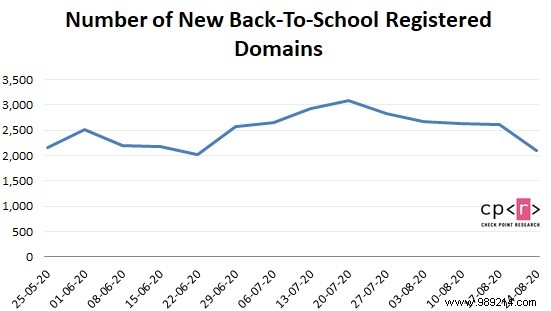
Check Point Research analyzed three months of domain registration data, revealing heightened cybercriminal activity:

  • Over 35,149 new back-to-school-themed domains registered; 512 confirmed malicious, 3,401 suspicious.
  • Peak weekly suspicious domains hit 356—far above the prior average of 115.
  • Late July/early August saw a 30% surge from June/July levels.
  • Peak malicious domains averaged 39 weekly, compared to 46 previously.

Figure 1: New back-to-school domains registered weekly over the last three months.
Safe Back-to-School: Expert Tips from Check Point to Shield Kids from Cyber Threats

Security Vulnerabilities in E-Learning Platforms

In early 2020, Check Point experts audited popular learning management systems, including WordPress plugins like LearnPress, LearnDash, and LifterLMS. We uncovered critical flaws exploitable by hackers—now patched—but underscoring ongoing risks in remote education tech.

The Threat Is Real

Children face tangible dangers:

– Zoomombing: Uninvited intruders disrupt Zoom calls with slurs, profanity, or offensive images. A San Diego school incident featured a masked intruder making lewd gestures, potentially traumatizing students.

– Cyberbullying: Harmful online content targeting peers. The Cyberbullying Research Center notes 37% of 12-17-year-olds affected, 30% repeatedly—impacting mental health.

– Ransomware: In 2019, over 1,000 U.S. schools hit by malware locking systems until ransom paid, often via deceptive emails.

– Phishing: Fraudulent messages tricking users into sharing sensitive data like passwords.

Back-to-School Safety Tips from Check Point

Our cybersecurity experts recommend these proven strategies:

Tips for Students

  1. Cover your webcam: Disable camera/mic when not in use; ensure no personal info is visible.
  2. Click links from trusted sources only: In class platforms, follow host instructions exclusively.
  3. Access portals directly: Log in via official sites; scrutinize email links and similar-looking domains.
  4. Use strong, unique passwords: Complexity thwarts brute-force attacks.
  5. Never share personal info: Keep sensitive data off online tools and cloud storage.

Tips for Parents

  1. Educate on phishing: Instruct kids to check with you before clicking email links.
  2. Spot cyberbullying: Teach it's unacceptable; encourage immediate reporting.
  3. Supervise devices: Stress never leaving them unattended to prevent unauthorized access.
  4. Enable parental controls: Tailor privacy settings for safe sharing.
  5. Build cybersecurity awareness: Ongoing education equips kids against evolving threats.

Tips for Schools

  1. Deploy antivirus: Protect devices with updated software to block malware.
  2. Fortify networks: Use firewalls and gateways against attacks and malicious content.
  3. Vet vendors rigorously: Thoroughly assess third-party platforms.
  4. Monitor continuously: Scan for anomalies indicating breaches.
  5. Provide training: Regular sessions for staff and students on latest threats.

Source: Check Point Software Technologies Ltd.
