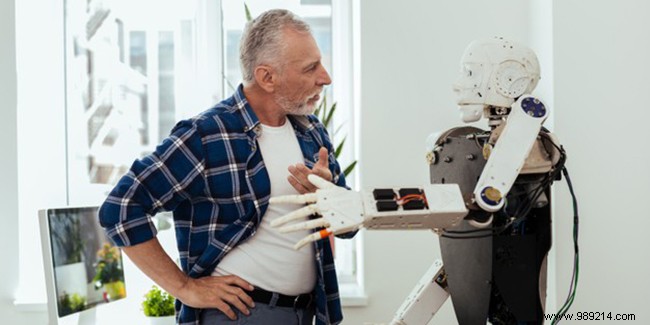
Aging populations in developed countries like France are straining social care systems with rising costs. Yet, assistive robotics offers cost-effective alternatives to human caregivers, especially for substantial support needs. In France, these technologies are gaining traction, easing the burden on family members. Here's an expert overview of the current assistive robots for seniors.
Robots are already embedded in daily life—from smart coffee makers and robot vacuums to programmable washers—though we often overlook them as "robots" since they lack humanoid forms.
The home care market is booming, with demands extending beyond chores to transport, medical aid, and personal assistance. Advances in AI and robotics are unlocking transformative solutions.
Japan leads globally, with robots aiding mobility for those with disabilities, helping with dressing, providing surveillance, and offering companionship via conversations or dementia-preventing brain games.
These pale compared to versatile humanoid robots in development, capable of lifting fallen individuals, offering company, and enabling telepresence. Public acceptance is key: robots must adapt to humans to counter fears of dehumanization. Thoughtful design fosters technology's humanization, building trust.
Paro, developed in 1993, is a therapeutic robot for Alzheimer's patients. Popular in Scandinavia, Germany, and France since 2014 (over 200 facilities by 2018), it boosts cognition, reduces stress (per studies), and withstands rough handling. Its seal shape—with large eyes, soft mouth, rounded head, and gentle movements—sparks curiosity without aggression.
French firm Aldebaran Robotics' humanoid Nao (58 cm, 6th generation since 2006) is a programmable education and research staple. It provides companionship, reception, info, and entertainment in health settings and businesses, with voice recognition in 20 languages.
Blue Frog Robotics' Buddy, France's first consumer companion (launched 2015 under €1,000, 2014 Innovation winner), prioritizes emotional appeal. Redesigned to 60 cm with soft curves, vacuum-like body, expressive screen face, and big eyes, it's now ideal for kids and seniors. Features include home patrols, agenda management, play, and easy photo/video sharing.
Romeo (1.40m, 40kg, carbon fiber/rubber; from Nao's creators since 2006) excels in autonomy support: opening doors, fetching items, walking aid, stair navigation, and emotion detection for adaptive responses.
Pillo by Pillo Health manages health: clock-radio sized, stores 4 weeks of meds, dispenses doses, reorders supplies, recognizes users via HD camera, converses, syncs devices, and enables teleconsults—addressing forgetfulness and dosage issues.
Toyota's Mobiro handles short-distance transport, stairs, and obstacle avoidance. Japanese options like Ifbot and Matilda continue to innovate.
With AI and robotics surging, the elderly assistive robot market is poised for explosive growth.
