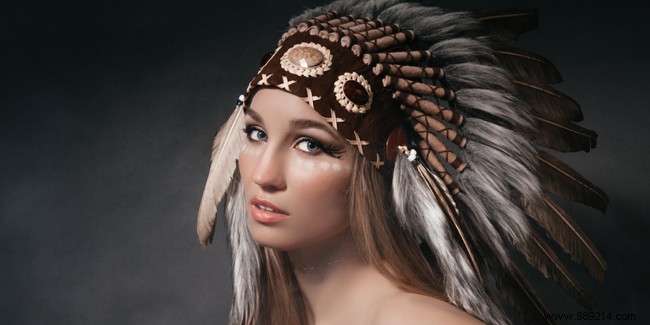
You've likely encountered the term 'cultural appropriation'—the adoption or 'borrowing' of elements from one culture by members of another, often rendering the source culture invisible or exploiting it for profit. While older generations might dismiss it as harmless, younger voices highlight its ties to identity and inequality. Let's unpack this complex concept with clarity and nuance.
The term emerged in late-20th-century critical theory, particularly among intersectional thinkers like bell hooks, a pioneering Black feminist scholar who passed away in 2021. Intersectionality examines overlapping oppressions—economic, racial, gender-based—rather than treating them in isolation. For a Black woman, for instance, domination isn't just the sum of racial and gender biases; it's a compounded, distinct experience.
In this framework, cultural appropriation intertwines racial, sexual, and capitalist dynamics. It's not mere innocent borrowing or homage—though intent matters—but profit-driven exploitation. This occurs when dominant groups capitalize economically, symbolically, or culturally on marginalized ones, often without credit or compensation. In a patent-obsessed capitalist system, this irony underscores the oppression: underrepresented groups lack protections afforded to the powerful.
The fashion industry frequently faces backlash for this. Brands profit from 'borrowed' motifs from African or Indigenous American tribes—patterns with deep cultural, spiritual, or historical significance—without crediting or compensating originators, centuries after their creation. The context is stripped away, valued only for aesthetics, much like hypothetically profiting from Christian stained glass or iconography while ignoring its religious weight. Yet, such hegemony protects dominant cultures.
This extends beyond fashion: Madonna's 1990 hit "Like a Prayer" and "Vogue" capitalized on voguing—a ballroom dance from New York's marginalized Black, Latino, gay, and trans communities. Lyrics like "it doesn't matter if you're Black or white" gloss over stark realities.
The core issue? It's unjust for outsiders to profit from a culture while its stewards gain nothing—echoing intellectual property principles these same entities fiercely defend.
Economically, it's clear: profiting at the expense of subaltern groups is akin to colonial plunder, evident in Louvre or British Museum collections. Picasso's modernist breakthroughs drew heavily from African sculptures, blending admiration with uncredited influence.
But ethically? Can we borrow without profit? Even dominant cultures like Christianity protest iconographic misuse. Is there anything 'sacred' off-limits, especially from historically oppressed groups? A motif, dance, or headdress laden with trauma—can it be aestheticized by those untouched by that history?
Respect is key, tied to the violence marginalized groups endure. In the U.S., Black hairstyles can cost jobs for Black wearers but face no such bias when adopted by whites, erasing power imbalances through aestheticization.
Boundaries aren't rigid; critics decry 'cancel culture.' Yet, it's not censorship—it's accountability. Wear a Native American headdress as a costume if you must, but expect rightful pushback for insensitivity.
Fear of appropriation shouldn't stifle exchange—cultural fusion drives evolution, as Picasso's influences show. Done right, it honors origins.
Creators should: deeply research context for respectful reinterpretation; credit sources explicitly; involve and compensate origin communities. In our monetary world, fair pay alongside inclusion transforms exploitation into genuine homage, sustaining cultures ethically.
