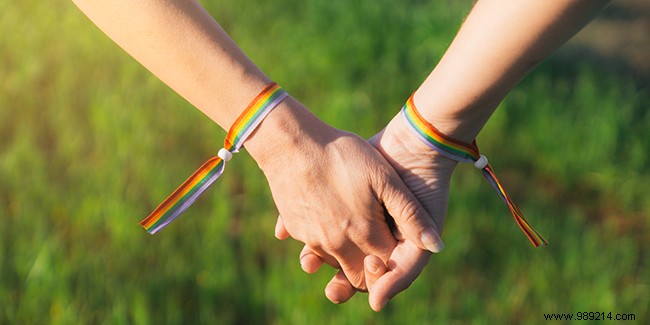
Homosexuality was once a taboo subject whispered in shadows. Today, Pride marches—preferred over 'Gay Pride' for their inclusivity—draw massive crowds, with public figures openly embracing their identities. Yet homophobic violence persists, and coming out remains a daunting step for many in the community, often with good reason.
Beyond the familiar labels of gay, lesbian, and bisexual, other voices have joined: trans, queer, intersex, forming the LGBTQI+ acronym. These groups share struggles against heterosexual and cisgender norms. While younger generations navigate these terms effortlessly, here's a clear guide to avoid misunderstandings that can deeply harm those already facing identity-based challenges. If you're aiming to be a true ally, this is for you.
France decriminalized sodomy in 1791, but homosexuality stayed marginalized. LGBTQ+ individuals lingered on society's fringes, as depicted in Jean Genet's novels from his prison cell. Vichy's laws reinforced this until 1982 under François Mitterrand.
The modern movement ignited across the Atlantic. In 1969, a police raid on New York's Stonewall Inn sparked riots, marking the first public stand against harassment. This birthed the gay rights movement, which intensified in the 1980s amid the AIDS crisis, exposing systemic neglect.
As acceptance grew, the focus expanded to LGBT rights, encompassing non-heterosexual orientations (lesbian, gay, bisexual) and gender identities diverging from birth sex (trans). Today, it includes Q for queer, I for intersex, and more—hence the '+'.
Sociologists have long distinguished gender from biological sex to address transgender experiences, recognized across cultures like India's hijras or Native American two-spirits. Biology isn't strictly binary; intersex individuals are born with or develop ambiguous traits.
Intersexuality challenges the male/female binary. Gender is a social construct built on sex but independent—think arbitrary links like blue for boys or football for men. Yet it's powerfully enforced, often harmfully so.
Transgender people experience a mismatch between gender identity and birth sex, unlike cisgender individuals (men with penises, women with vaginas, simplifying for non-intersex cases). This can cause gender dysphoria, a profound distress. Even cisgender people suffer from rigid norms, like men's higher suicide rates from emotional repression ('toxic masculinity').
A transsexual is a transgender person post-surgery, but surgery isn't required. Advocacy emphasizes gender's fluidity: one might identify as a woman with a penis or fluidly mix codes.
LGBTQI+ isn't monolithic—it's a broad tent united by stigma. Assimilationists seek marriage equality; radicals like Guillaume Dustan celebrated bareback sex. Some reclaim symbols, like Act Up's pink triangle from Nazi camps.
Queer, once a slur, is now a badge of pride, rejecting norms and celebrating difference.
"Why flaunt it?" Visibility counters erasure. Queers demand existence, not tolerance—building chosen families and embracing intersectionality (overlapping discriminations by sex, race, class).
They challenge white, male, heterosexual dominance, crafting vibrant alternatives under the rainbow flag. Terms like pansexual (attraction beyond binary gender) enrich the lexicon. Armed with this knowledge, let's foster understanding over ignorance.
